 CAPACUANSMALL SCALE
Paracale gold: eight centuries in the gold town.
Paracale, on the north coast of Camarines Norte, is one of the oldest gold districts in the Philippines. This guide covers its gold from river panning to the pre-war mines, the geology behind it, and mining in Paracale today.
- 12thCentury by which gold was worked here, at the latest
- 1570sSpanish records of placer gold mining in Paracale
- 13Gold mines active in the district before the Second World War
- ~150tGold produced by the district (MGB estimate)
The place
Where Paracale is
A coastal town in the gold district of Camarines Norte.
Paracale is a municipality on the north coast of Camarines Norte, in the Bicol Region of south-eastern Luzon, about 200 km east-southeast of Manila. Together with its neighbour Jose Panganiban, it forms the Paracale–Jose Panganiban gold district.
Most of the province lives from farming, mainly rice and coconut. In Paracale, small-scale gold mining is one of the main livelihoods, and the town is often called the gold town of Camarines Norte.
Part of our Minahang Bayan lies in Paracale, in Barangay Capacuan, which gives our association its name.
Sources: Camarines Norte provincial profile; Acenas & Vargas, report for Paracale Gold Corp. (2026).
River gold
Pabirik and placer gold
Paracale’s first gold came from its rivers.
By at least the 12th century, people were panning the streams around Paracale and digging shallow pits into rich outcrops. The wooden gold pan, the pabirik, is still a symbol of the town.
When Spanish expeditions reached the gold mines of Camarines in the early 1570s, they recorded extensive placer gold mining in Paracale. Placer gold is gold that has been washed out of the rock and collected in river gravel and soil.
Geology explains why there is so much of it. In the eastern part of the district, 300 to 500 metres of the old mineralised land surface has been worn away, according to a UNDP report. As the rock eroded, its gold was freed and carried into the rivers, where people could pan it.
Sources: J. C. Zafra, technical report for Paracale Gold Corp. (2022); Acenas & Vargas (2026), citing UNDP.
1900s–1941
Dredges and the pre-war mines
Under American rule, Paracale’s gold went industrial.
In the early 20th century, gold dredges worked the rivers around Paracale and Mambulao, the old name of Jose Panganiban, and mining companies went underground after the veins.
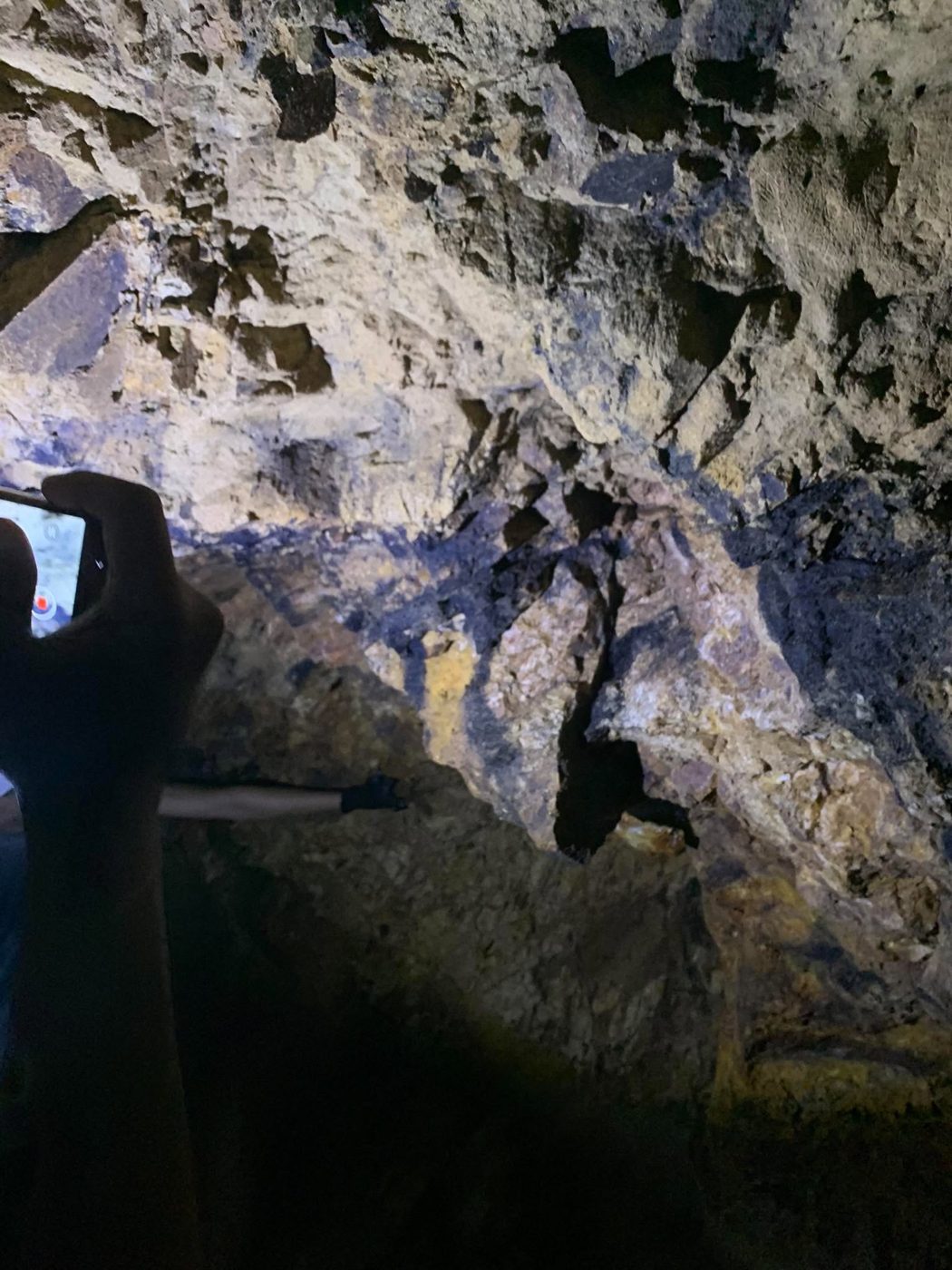
In the 1930s, Paracale Nacional Gold Mining Company and International Engineering Corporation opened underground mines on the Manila and Vallejo veins, driving at least 2,200 metres of tunnels before the war. In 1939, about 8,500 tons of ore were reported mined from the Manila Vein, at typical grades of about 20 grams of gold per tonne.
Government records list 13 active gold mines in the district before 1941, and American prospectors also explored through Tumbaga Mining Company. Vicente L. Inocalla Sr., the father of our President Allan Inocalla, worked in the Paracale mines in these years. The Pacific War stopped mining in 1941, and only a few mines reopened afterwards.
Sources: Zafra (2022); Acenas & Vargas (2026); Lopez, Isles of Gold: A History of Mining in the Philippines (1982). The 1939 grade is a historical figure, not a current estimate.
1950s–1990s
After the war: iron, exploration and small-scale mining
Big companies explored the veins, but none returned to large-scale gold production.
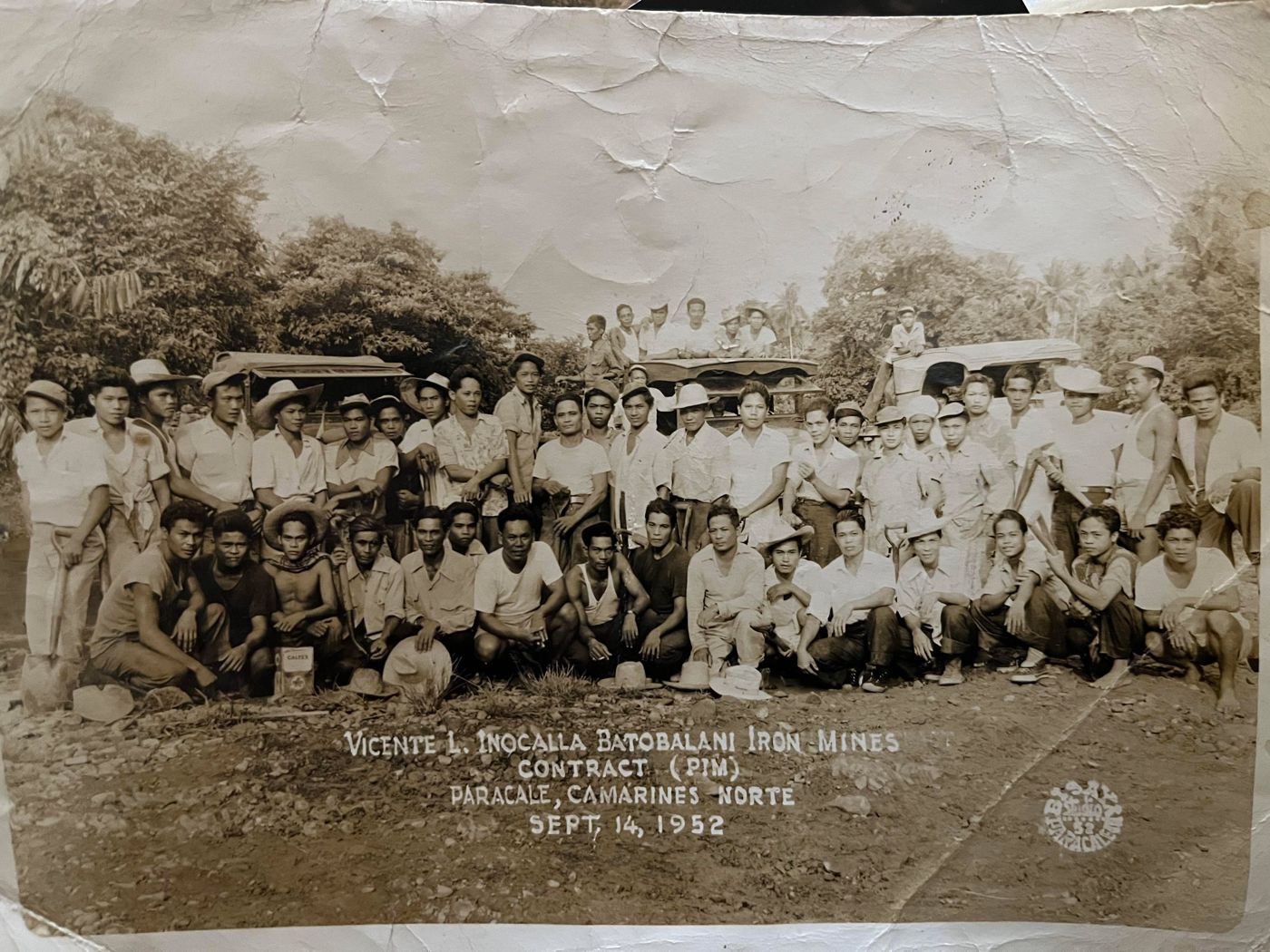
After the war, Philippine Iron Mines worked the Batobalani iron mines in Paracale. In 1952, Vicente L. Inocalla Sr. worked there as a mining and hauling contractor for the company.
In 1956, the gold claims of Paracale Nacional Gold Mining Company were sold at public auction to Philippine Iron Mines. The company later mapped the old gold workings on the Manila and Vallejo veins but was liquidated before mining restarted, and in 1976 the Bureau of Mines took custody of the claims and drilled to test the veins at depth.
In the 1980s, Benguet Corporation and Alpha Resources Development Corporation explored across the district. At that time one placer operation, three medium-scale underground mines and many small-scale miners together produced an estimated 3 tonnes of gold a year. The narrow veins suited careful, selective mining better than big open pits, and small-scale miners carried on.
Sources: Zafra (2022); Acenas & Vargas (2026); Inocalla family archive.
The rocks
Where Paracale’s gold comes from
Gold-bearing quartz veins formed by hot water from deep magma.
The oldest rock in the district is the Paracale Granodiorite, a body of once-molten rock about 17 km long and 4 km wide. Hot, mineral-rich water rising from magma at depth flowed up through cracks and cooled near the surface, leaving quartz veins with gold, silver and sulphide minerals. Geologists call these low-sulphidation epithermal veins.
The best-known example is the Manila Vein, which runs through our Minahang Bayan. It can be followed at the surface for more than 800 metres and is up to about 1 metre thick. Some of its gold is free gold large enough to see; much more is in grains too fine to see, spread through the quartz.
Sources: Zafra (2022); Aurelio & Peña, Geology of the Philippines (2010); Acenas & Vargas (2026).
Today
Gold mining in Paracale today
Much of it informal, and a legal route is growing.
Gold is still mined in Paracale by small-scale miners. Many unlicensed miners, known locally as “high-graders”, move from spot to spot, and mercury has long been used to catch fine gold, with risks to health and to the rivers.
Under Republic Act No. 7076, the People’s Small-Scale Mining Act of 1991, a province can declare a Minahang Bayan, where registered small-scale miners work legally with permits and environmental rules.
Our Minahang Bayan of about 81 hectares spans Paracale and Jose Panganiban. We mine with machines such as excavators and trucks, process ore without mercury, and put part of what mining earns back into the local community. Gold mining carries real risks, and nothing on this page is a promise of returns.
Sources: Acenas & Vargas (2026); Republic Act No. 7076 (1991).
Gold mining investment · Philippines
Join us as an investor.
Contact us for site details, survey information, plant information and our plans. We reply within two business days.
Or email us directly:
Mining investment carries risk, including the loss of capital. This website is for information only and is not an offer of securities.