 CAPACUANSMALL SCALE
Gold mining in the Philippines, explained.
Short, sourced guides to the history, law, geology and processing behind our work. Written for investors new to gold mining, and checked against the reports we rely on.
Guides on this page
- 01800 years of gold in ParacaleHow a small corner of Camarines Norte became one of the best-known gold districts in the Philippines.
- 02From rock to gold: why there are no nuggetsMost people picture miners digging up lumps of gold. In our veins, the gold is almost always too fine to see, locked inside hard quartz rock.
- 03What is a Minahang Bayan?The Philippine legal framework for community small-scale mining, in plain words.
- 04How to read gold vein dataThe terms used on our Gold Veins page, and what they can and cannot tell you.
- 05Recovering gold without mercuryWhy mercury is still used in small-scale gold mining, and how ore is processed without it.
Story
800 years of gold in Paracale
How a small corner of Camarines Norte became one of the best-known gold districts in the Philippines.
People were working gold in the rivers around Paracale by at least the 12th century, long before Europeans arrived. They panned the streams and dug shallow pits into rich outcrops. When Spanish expeditions reached Camarines in the early 1570s, they recorded extensive placer gold mining here.
In the American period, dredges worked the rivers and companies went underground. In the 1930s, Paracale Nacional Gold Mining Company drove at least 2,200 metres of tunnels on the Manila and Vallejo veins, the same veins inside our Minahang Bayan today. Before the Second World War, government records list 13 active gold mines in the district.
The war stopped the mines, and only a few reopened. Over the following decades Philippine Iron Mines, the Bureau of Mines, Benguet Corporation and others explored the veins, but none went into large-scale production. The narrow veins suit careful, selective mining better than big open pits.
In all, the district is estimated to have produced about 150 tonnes of gold. Small-scale miners, including the Inocalla family, have kept mining here ever since. In 1991 the People’s Small-Scale Mining Act gave them a legal framework, which is how our Minahang Bayan came to be.
Sources: J. C. Zafra, technical report for Paracale Gold Corp. (2022); Acenas & Vargas (2026); MGB estimate of district production.
The process
From rock to gold: why there are no nuggets
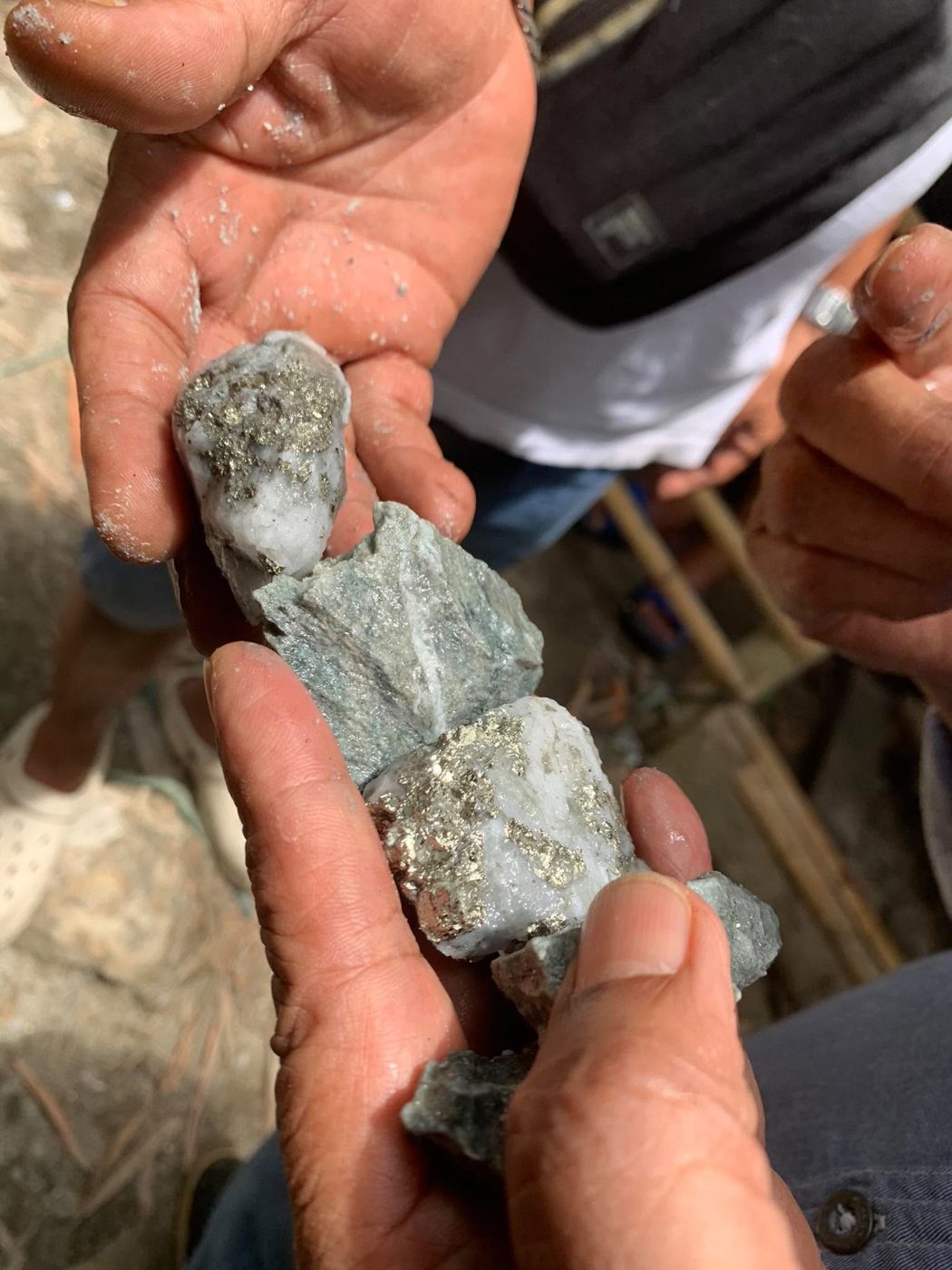
Most people picture miners digging up lumps of gold. In our veins, the gold is almost always too fine to see, locked inside hard quartz rock.
How much gold is in the rock? A good vein might hold 5 to 20 grams of gold in every tonne of rock. At 5 g/t, a tonne of ore, about the weight of a small car, holds enough gold for a single ring. Most of it is in grains finer than sand, spread through the quartz and the sulphide minerals around it.
1. Mining. Ore is cut from the vein underground and hauled to the plant. Because the veins are narrow, the aim is to take as much vein and as little waste rock as possible.
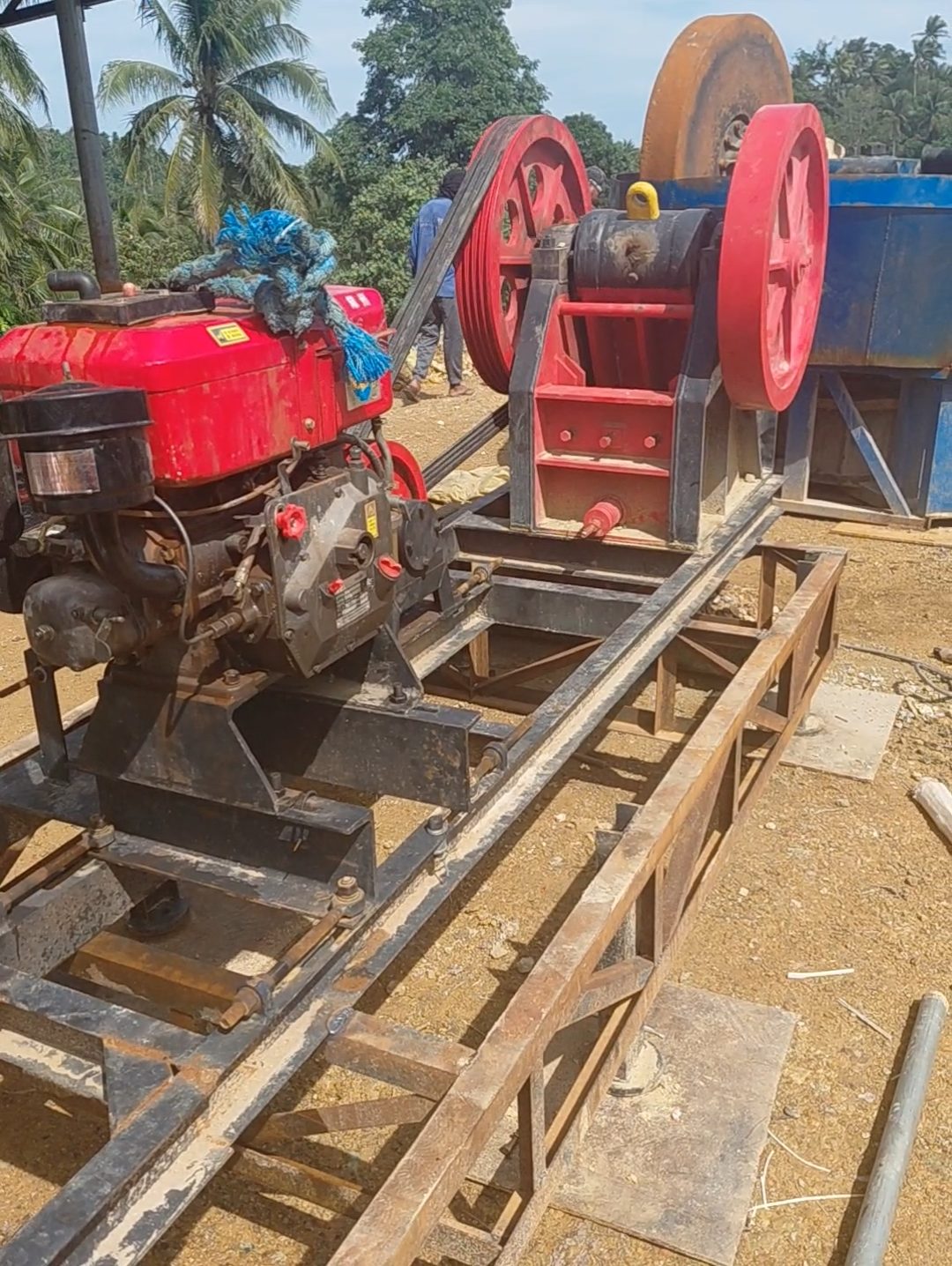
2. Crushing. A jaw crusher breaks the ore from fist-sized and larger pieces down to gravel.
3. Grinding. A wet pan mill and a ball mill grind the gravel with water into a fine slurry, like flour mixed in water. This is what frees the tiny gold grains from the rock around them. Any coarse gold that is freed can be caught early by gravity, because gold is far heavier than rock.
4. Leaching. The slurry is stirred in closed leaching tanks with a dilute sodium cyanide solution, kept alkaline with lime. The cyanide dissolves the fine gold and silver out of the ground rock, a little like sugar dissolving in tea. This is the standard method used by most gold mines worldwide; the solution is weak, and alkaline conditions stop toxic gas from forming.
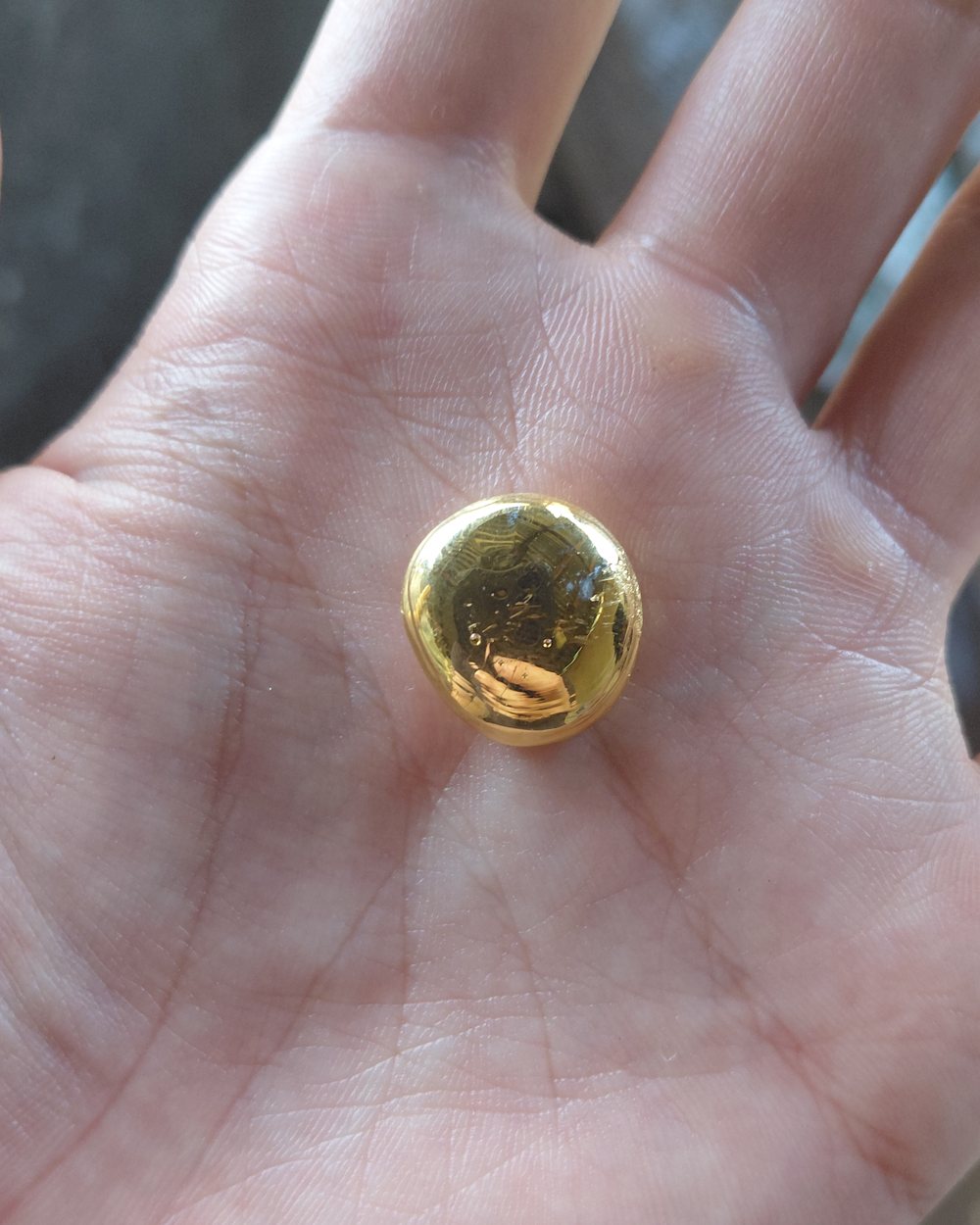
5. Recovery. Grains of activated carbon in the tanks soak up the dissolved gold and silver (the carbon-in-pulp method). The metal is then washed off the carbon and melted into a bar of mixed gold and silver, called doré, which is sent on for refining.
What is left. The ground rock that remains, the tailings, is stored on site. Older methods left gold behind in tailings, which is why our second, smaller plant reprocesses them.
So every gram of gold takes a lot of work: breaking hard rock, grinding it to powder, and careful chemistry. That is why grade, recovery rate and plant capacity matter so much to the economics of a mine.
Sources: J. C. Zafra, technical report for Paracale Gold Corp. (2022), describing the family’s gravity and carbon-in-pulp gold mill; general metallurgy. Grades are examples, not figures for our veins.
The law
What is a Minahang Bayan?
The Philippine legal framework for community small-scale mining, in plain words.
Minahang Bayan means “people’s mining area”. It is an area set aside by the government for small-scale mining under Republic Act No. 7076, the People’s Small-Scale Mining Act of 1991.
Only organised, registered small-scale miners can work in a Minahang Bayan, usually as a cooperative or an association such as ours. The area is declared through the Provincial Mining Regulatory Board, and mining is carried out under small-scale mining contracts and permits overseen by the Mines and Geosciences Bureau (MGB) and the Department of Environment and Natural Resources.
The law aims to make small-scale mining legal, safe and fair: to create jobs, share mineral wealth more widely, and manage mining areas in an orderly and environmentally responsible way. It also requires gold from small-scale mining to be sold to the Bangko Sentral ng Pilipinas, the central bank, or its accredited buyers.
Why it matters to an investor: mining here happens inside a legal framework, with a regulator, permits and environmental rules, rather than informally. Our association is a miners’ association, not a company; how outside investment can work alongside it is explained on the investor page.
Sources: Republic Act No. 7076 (1991) and its implementing rules; Mines and Geosciences Bureau. This is a general summary, not legal advice.
The numbers
How to read gold vein data
The terms used on our Gold Veins page, and what they can and cannot tell you.
Grams per tonne (g/t). The grade of the rock. 5 g/t means 5 grams of gold in one tonne of rock. One troy ounce is about 31.1 grams, so a tonne at 5 g/t holds about a sixth of an ounce.
Strike, dip and width. Strike is the compass direction a vein runs in, dip is how steeply it slopes into the ground, and width is how thick it is. Narrow veins can be very rich, but some waste rock is always mined with them, which lowers the grade that reaches the plant.
Grab, channel and drill samples. A grab sample is a piece of rock picked by hand, often the best-looking piece, so it shows that gold is present but not the average grade. Channel samples cut across a vein and drill cores come from deep inside it; together, they are what a reliable estimate needs.
Historical estimate, exploration target, resource and reserve. In Canada (NI 43-101) and Australia (JORC), a mineral resource or reserve may only be stated by a qualified person after enough drilling and testing. An older figure made before those rules is a historical estimate. An exploration target is a conceptual range used to plan work. None of the figures on our site is a resource or reserve, and we label each one.
Recovery. Not all the gold in rock can be recovered. A plant that recovers 80% gets 4 grams out of rock holding 5 g/t.
General explainer. Definitions follow the Canadian NI 43-101 standard and the Australian JORC Code.
The process
Recovering gold without mercury
Why mercury is still used in small-scale gold mining, and how ore is processed without it.
In much of the world, small-scale miners mix mercury with crushed ore. The mercury binds to the gold, and is then burned off, releasing toxic vapour that harms miners, their families and the environment. Small-scale gold mining is the largest source of man-made mercury pollution worldwide, which is why the Minamata Convention on Mercury aims to reduce and eliminate it.
Our ore goes through a mercury-free process instead. A jaw crusher breaks it into small pieces, and a wet pan mill and a ball mill grind it into a fine slurry so the gold is released. The gold and silver are then dissolved out in leaching tanks and recovered as bullion.
Much of the gold in our veins is free-milling, meaning it is released by crushing and grinding alone, which suits this kind of process. Material left behind by older, less efficient methods, the tailings, can be reprocessed to recover gold that was missed.
We have worked with planetGOLD, the UN Environment Programme-led programme that helps small-scale miners stop using mercury. A mercury-free processing plant in Capacuan was built with its support.
Sources: UN Environment Programme and planetGOLD; Minamata Convention on Mercury.
Gold mining investment · Philippines
Join us as an investor.
Contact us for site details, survey information, plant information and our plans. We reply within two business days.
Or email us directly:
Mining investment carries risk, including the loss of capital. This website is for information only and is not an offer of securities.