 CAPACUANSMALL SCALE
Jose Panganiban gold: the town once called Mambulao.
Jose Panganiban, in Camarines Norte, was named for its gold long before it was renamed for a national hero. This guide covers its gold and iron history, the mines of the 20th century, and how gold is mined and processed in the town today.
- ~90kgGold a year recorded here in the mid-1820s
- 1934Year Mambulao was renamed Jose Panganiban
- 50yrsOf iron mining at Larap, 1925 to 1975
- 27Barangays in the town today
The name
Mambulao: “bountiful in gold”
A town named after its gold.
Until 1934, the town was called Mambulao, from mambulawan, meaning “bountiful in gold”. Act No. 4155 renamed it Jose Panganiban, in honour of José María Panganiban, a writer of the Propaganda Movement who was born in the town.
Jose Panganiban lies on the north coast of Camarines Norte, beside Paracale, and the two towns share one gold district. Its streams drain into Mambulao Bay, which still carries the old name. Today the town has about 60,600 people in 27 barangays, and small-scale gold mining remains one of its main livelihoods.
Sources: Act No. 4155 (1934); Philippine Statistics Authority, 2024 census; municipal history.
Before 1900
Gold before and under Spanish rule
Mambulao was mining gold before the Spanish arrived.
Gold was worked in Mambulao long before Europeans came. Spanish records from the 1570s describe native settlements in Paracale and Mambulao that were already mining gold.
By the mid-1820s, the town’s gold output was recorded at about 3,200 ounces, around 90 kg, a year. In the American period that followed, gold dredges and mining companies worked the rivers and veins around Paracale and Mambulao.
Sources: municipal history; Zafra (2022); Lopez, Isles of Gold (1982).
Iron
Larap: a town of iron as well as gold
For half a century, Jose Panganiban was also an iron town.
Philippine Iron Mines worked the iron ore at Larap, in Jose Panganiban, from 1925 to 1975. At one time it was the largest iron mine in Asia.
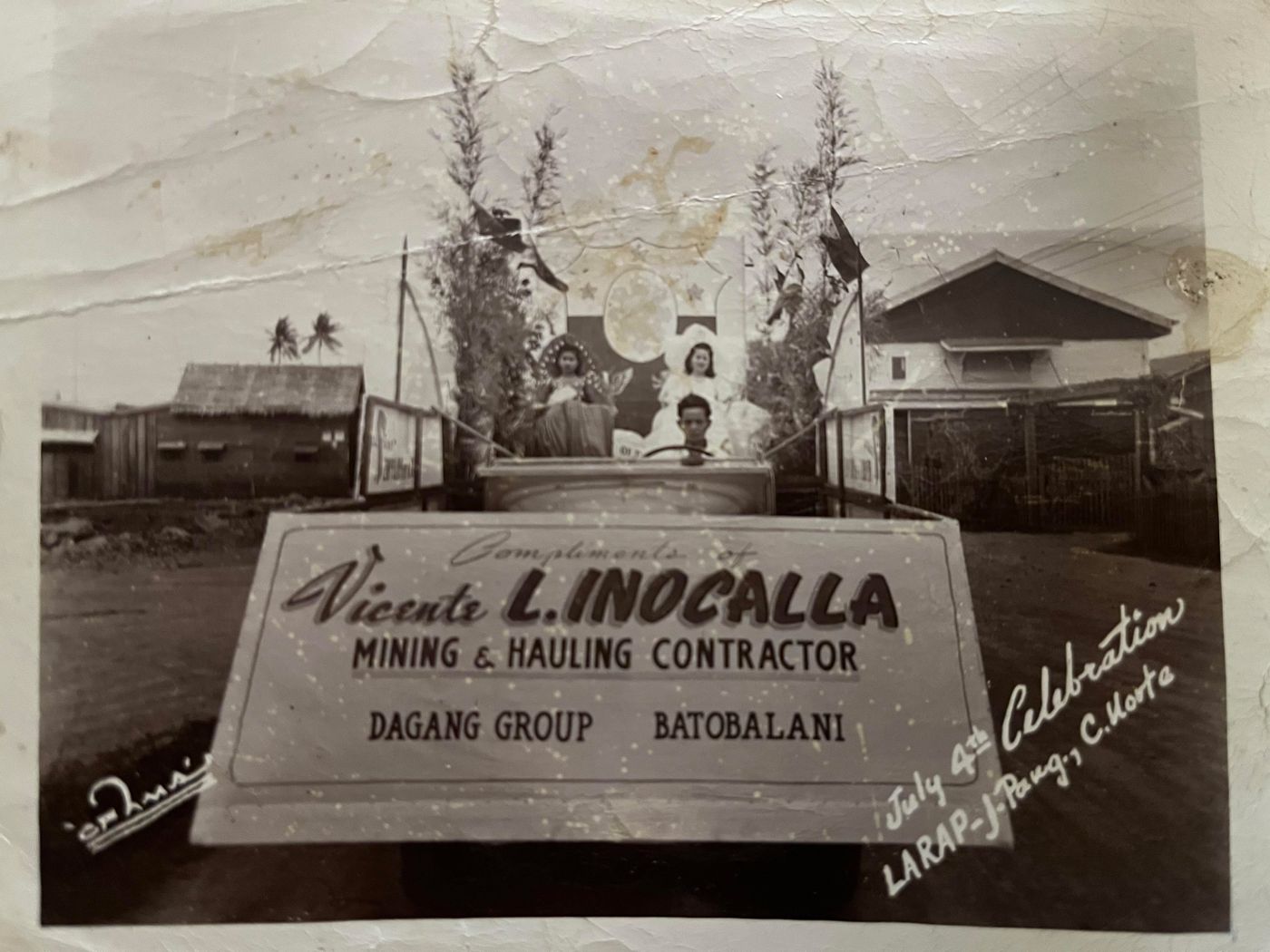
The mine shaped the town. The airstrip at the former Philippine Iron Mines site in Larap is about 10 km from our site. Local contractors worked alongside the company, among them Vicente L. Inocalla Sr., the founder of the Inocalla family’s mining business, whose “Mining & Hauling Contractor” float joined the July 4th parade at Larap.
Sources: municipal history; Acenas & Vargas (2026); Inocalla family archive.
1983–1992
Sta. Rosa Mines
A modern gold mine about 5 km from our area.
From 1983 to 1992, Sta. Rosa Mines, managed by Benguet Corporation, operated in Jose Panganiban about 5 km from our area. It processed its ore by carbon-in-leach, a cyanide leaching method, and reportedly produced about 100 kg of gold a month.
In the same decade, the district as a whole produced an estimated 3 tonnes of gold a year from one placer operation, three medium-scale underground mines and many small-scale miners.
Sources: Zafra (2022); Acenas & Vargas (2026). Production figures are historical and reported, not verified.
Today
Gold mining and processing in Jose Panganiban today
Where our association works and processes its ore.
Part of our Minahang Bayan lies in Jose Panganiban, in Barangay San Rafael, where the San Rafael Vein has been traced for more than 1 km. Nearby, at Tumbaga in San Rafael, the Inocalla family donated five hectares of land, now home to AMSAI Elementary School, Arnis classes, and yoga and meditation retreats.
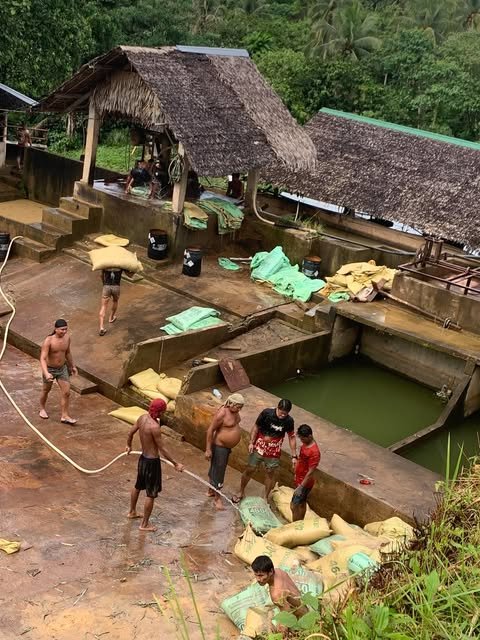
Our processing plant stands in Barangay Santa Rosa Sur, Jose Panganiban. A jaw crusher, a wet pan mill and a ball mill grind the ore, and leaching tanks recover the gold and silver without mercury. Beside it, a smaller plant of about 10 tonnes a day reprocesses old tailings, and our “Cyclone” system turns the remaining waste into bricks and concrete.
Getting there: from Manila, take the Maharlika Highway to Barangay Talobatib in Labo, turn towards Jose Panganiban, then turn at Teddy Crossing in Barangay Santa Rosa. The site is about 3 km along a concrete farm-to-market road, roughly 7 to 8 hours’ drive from Manila.
Sources: Acenas & Vargas (2026); the association. Gold mining carries real risks, and nothing on this page is a promise of returns.
Gold mining investment · Philippines
Join us as an investor.
Contact us for site details, survey information, plant information and our plans. We reply within two business days.
Or email us directly:
Mining investment carries risk, including the loss of capital. This website is for information only and is not an offer of securities.